listOn this page
Most people can explain what charity feels like before they can explain what it actually is. It's the instinct to help someone whose situation you don't share, without expecting anything back. But turn that instinct into an organization, and things get technical fast: what counts as a real charity, how do you know one is legitimate, and does your gift get you anything at tax time? This guide walks through the definition, the types of charity, how to check one is real before you give, and a few ways to help that don't cost anything at all.
A charity is an organization set up to benefit the public rather than to turn a private profit. In England and Wales, that's a specific legal status you register for with the Charity Commission. In the Netherlands, it's a tax status called ANBI. Before you give, it's worth taking thirty seconds to check the organization is actually registered.
Join Hands for Impact: Your Donation Counts. Raise Money for Charity Today!
What Is a Charity?
A charity is an organization established for the benefit of the public, rather than private profit, and it usually has to register with a national regulator to use that status. In England and Wales, that regulator is the Charity Commission, and "charity" is a defined legal status, not just a description anyone can apply to their organization. As of March 2026, there were 171,112 registered charities on the Commission's register, with combined annual income of roughly £107 billion, according to the Charity Commission's own casework and registrations data.
In the Netherlands, there's no separate "charity" registration in quite the same sense. Instead, organizations apply for ANBI status, Algemeen Nut Beogende Instelling, a tax designation from the Belastingdienst confirming the organization serves the public benefit and letting donors claim tax relief. This is the detail most guides skip: "charity" means a legal status in one country and a tax status in another, and knowing which system you're dealing with changes what you should check before giving.

What are the Main Types of Charity?
Charities generally fall into three structural families, based on where their money comes from and who controls it.
Type | How It's Funded | Who Governs It | Typical Example |
Public charity | Ongoing donations from the public | A board of trustees | A local hospice or food bank |
Foundation | A single source, often an endowment | Trustees or a family board | A grant-making family foundation |
Charitable trust | Assets set aside for a specific purpose | Trustees named in the trust deed | A trust funding scholarships |
Charitable Incorporated Organization (CIO) | Public donations, with limited liability structure | A board of trustees | A registered CIO charity |
Alongside these structural types, most people search by cause instead: health charities, children's charities, environmental groups, disaster relief funds, or faith-based organizations. For health-related giving specifically, our guide to healthcare charities across Europe covers that category in more depth.
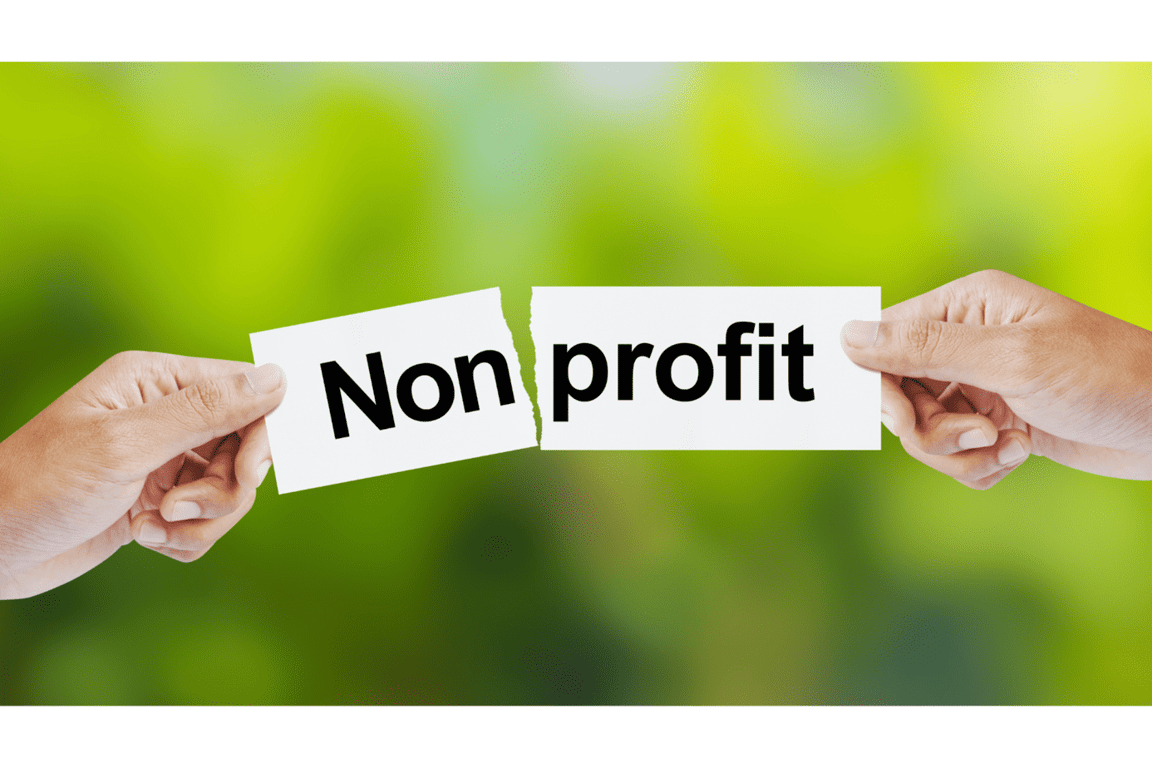
What Is the Difference Between a Charity and a Nonprofit?
Every charity is a nonprofit, but not every nonprofit is a charity. The dividing line is a public-benefit test: a charity has to prove its purpose serves the public, not just its own members, and that test comes with real tax consequences for donors.
Charity (England & Wales) | Nonprofit (general) | ANBI (Netherlands) | |
Registers with | Charity Commission | Varies, often no central register | Belastingdienst |
Public benefit required | Yes | Not always | Yes |
Donor tax deduction available | Yes, via Gift Aid | Not guaranteed | Yes, via giftenaftrek |
A sports club or a professional association might be a nonprofit without qualifying as a charity, since its main benefit goes to its own members rather than the wider public. In the Netherlands, this same distinction separates a full ANBI from an SBBI (a social interest promoting institution), which has looser tax benefits.
How Do You Check a Charity Is Legitimate?
Start with the charity's registered name and number, both of which should be listed clearly on its website or donation page. From there, five checks take a few minutes and tell you most of what you need to know:
- Find the registered name and charity number on the organization's own site.
- Search the register of charities to confirm the entry matches.
- Check that the charity's accounts have been filed on time, not overdue.
- Look at what proportion of spending actually goes toward charitable activity versus overhead.
- Confirm the name on the donation page matches the registered name exactly.
Legitimate charities are generally transparent about all of this by design; if you can't find basic registration details anywhere on an organization's site, that's reason enough to pause before giving. Our overview of the fundraising code of ethics covers what trustworthy fundraising is supposed to look like in more detail.
Are Donations to Charity Tax-Deductible?
It depends on which country you pay tax in and which register the charity sits on. This is general information, not tax advice, so check your own country's current rules before filing.
In the UK, Gift Aid lets a registered charity claim back the basic rate of tax on your donation, adding around 25% to the value of your gift at no extra cost to you. Gift Aid was worth an estimated £1.7 billion to UK charities in 2025, but roughly £560 million goes unclaimed each year simply because donors don't tick the box, per UK Fundraising's summary of the CAF report.
In the Netherlands, regular one-off gifts are deductible above a threshold of 1% of your income (minimum €60), up to a cap of 10%, per the Belastingdienst's own guidance on gift deductions. Periodic gifts, agreed for at least five years, have no threshold at all and are fully deductible up to a much higher annual cap. If you're wondering whether crowdfunding contributions work the same way, we cover that separately in our guide to tax-deductible crowdfunding.
The Reward
The trend isn't that people have become less generous individually, it's that fewer people are giving at all. In the UK, donations fell to an estimated £14 billion in 2025, down from £15.4 billion in 2024, the first drop in five years, according to CAF's own announcement of its UK Giving Report 2026. Only 55% of UK adults gave in 2025, down from 69% in 2016, roughly six million fewer donors over the decade. The average gift also shrank, from £72 to £65.
The pattern isn't unique to Britain. Giving as a share of income remains lower across Europe than on most other continents, which is part of why checking a charity is genuinely registered, and giving with confidence once you have, matters more than ever.
Turn Compassion into Action: Support Charities Today! Start A Crowdfunding Campaign!
Five Ways to Support a Charity This Year
Money is one option, but it's only one of five, and the other four don't cost anything.
- Give a one-off or regular donation. Even a small recurring gift helps a charity plan ahead better than a single large gift.
- Donate goods. Clothing, equipment, and household items are often just as valuable as cash to the right organization.
- Give your time or skills. Volunteering a specific skill, accounting, design, writing, can be worth more than the hours themselves.
- Advocate and share. Sharing a charity's work with your own network costs nothing and genuinely widens their reach.
- Run a fundraiser for the cause. Turning your own birthday, a challenge, or an event into a fundraising page multiplies what a single donation could do.
People who've seen a charity's impact locally are about twice as likely to give locally, so a fundraiser tied to something visible in your own community tends to perform better than a generic appeal.
The Bottom Line
A charity is, legally, an organization built to serve the public rather than turn a profit, registered and regulated to prove it. Checking that registration before you give takes less time than reading this article. And money is just one of five ways to help, the other four are free, and just as real.
FAQs (Frequently Asked Questions)
1. What Is a Charity in Simple Terms?
An organization set up to benefit the public rather than make a private profit. In England and Wales, that means registering with the Charity Commission; the idea is similar across most countries, even where the legal process differs.
2. What Are the Four Main Types of Charity?
Charitable trusts, unincorporated associations, Charitable Incorporated Organizations (CIOs), and charitable companies limited by guarantee. Each has a different governance structure, but all meet the same public-benefit test.
3. How Do I Know if a Charity Is Real?
Search the charity's registered name and number on the official register for your country, and confirm it matches what's shown on the donation page you're being asked to give through.
4. Can I Deduct Charity Donations From My Tax?
Often, yes, but it depends on your country. UK taxpayers can use Gift Aid; Dutch taxpayers can deduct gifts to ANBI-registered organizations, with more generous terms for gifts agreed for five years or longer.
5. How Can I Support a Charity Without Giving Money?
Donate goods, volunteer your time or a specific skill, share the charity's work with your network, or start a fundraiser on their behalf. All four cost nothing beyond your time.
6. How Much Do People Actually Donate?
In the UK, 55% of adults gave to charity in 2025, with an average gift of £65. Giving levels vary by country, but the broader trend across Europe has been a gradual decline in the number of people giving, even where total amounts occasionally held steady.

Niels is the co-founder and managing director of WhyDonate. After years of working in the non-profit sector, he decided in 2012 to found WhyDonate with the vision of making online fundraising more efficient and accessible. WhyDonate connects donors and charities around the world through crowdfunding, peer-to-peer fundraising, and donation plugins for websites.